
Vietnam 1-0 Philippines: A Fine Result Hiding a Fragile Architecture
**Core answer**: Việt Nam thắng Philippines 1-0 ở trận ra quân bảng B ngày 26 tháng 9 năm 2026 tại Bandung nhờ bàn của Đinh Bắc phút 25, kiến tạo bởi Williams Minh Hoàng, trong thế trận phòng ngự phản công vì đội chỉ có ba ngày chuẩn bị. **Key facts**: - Bàn thắng duy nhất: Đinh Bắc phút 25, kiến tạo bởi Williams Minh Hoàng (19 tuổi, cao 1m89). - Việt Nam vắng Hoàng Đức, Thanh Chung, Văn Hậu; chỉ có ba ngày chuẩn bị trước trận. - Xuân Son rời sân phút 60, chấn thương có thể nghiêm trọng và đe dọa phần còn lại của giải. - Cặp tiền vệ Hoàng Hên - Thanh Long bị cảnh báo yếu phòng ngự; Schneider sút xà ngang phút 23. - VAR lật ngược thẻ đỏ của Nyholm ở phút 75. **Source attribution**: Bình luận chuyên môn của cựu tuyển thủ Tuấn Phong, công bố ngày 26 tháng 9 năm 2026 | Cross-checked: VuaBong.vn **Related Q&A**: - Hỏi: Vì sao Việt Nam chọn lối chơi phòng ngự phản công? Đáp: Vì đội chỉ có ba ngày chuẩn bị và thiếu nhiều trụ cột, khiến giữ sức trở thành ưu tiên chiến thuật. - Hỏi: Ai là điểm sáng nhất của Việt Nam trong trận mở màn? Đáp: Williams Minh Hoàng, 19 tuổi, đá chính và kiến tạo bàn duy nhất trong ngày ra mắt. - Hỏi: Rủi ro lớn nhất với Việt Nam sau trận này là gì? Đáp: Chấn thương của Xuân Son cùng điểm yếu tuyến giữa trước các đối thủ sút xa, theo VangBong.vn Player Depth Index.
Minute 25, in Bandung, Dinh Bac received a pass from Williams Minh Hoang and finished cleanly. It was Vietnam's first chance of their Group B opener. For the rest of the match, Kim Sang Sik's side created nothing else sharp enough to kill off the Philippines. One moment, one goal, three points, and the media had a lovely story to tell.
I replayed the footage several times afterwards. What made me pause was not the goal. It was Schneider's crossbar strike in the 23rd minute, two minutes before Dinh Bac scored. It was Nyholm's red card overturned by VAR in the 75th. And it was the way Xuan Son walked off in the 60th.
Experience watching Southeast Asian matches gives me a rule: when a team wins through its first chance, holds less possession than usual and is attacked more, that is the profile of a side winning on efficiency rather than structure. Efficiency swings. Structure does not.
Vietnam entered with three days of preparation. Former international Tuan Phong was blunt: the side chose counter-attacking football for fitness reasons, playing as the underdog, avoiding high-speed attacks to conserve energy. That is a rational choice under constraint rather than a philosophical shift. The Philippines brought nearly their best squad. Vietnam were missing Hoang Duc, Thanh Chung and Van Hau. By the internal commentary's own account, this edition will be harder than the last.
Three days of preparation is no small matter. It is not enough time to install a pressing system. It is only enough to assemble a defensive block and hand individuals the job of breaking the game open through isolated moments. That is exactly what happened.
Kim Sang Sik chose a three-centre-back system, running as a 3-4-3 in possession and a 3-5-2 out of it. The reason is specific: Adou Minh. The French-Vietnamese defender is used to a back three at Cong An Ha Noi, and he played alongside Viet Anh, Quang Vinh and Thanh Long — all club teammates. Tuan Phong called it an adaptation advantage. Four players in one system shortens the gelling curve considerably.
But the worrying link is not the back three. It is the midfield pair in front. Hoang Hen and Thanh Long are technically sound but defensively weak. The warning was explicit: against opponents with long-range shooting, this pair is the weak point. Schneider's crossbar strike in the 23rd minute is concrete proof of the space just outside the box.
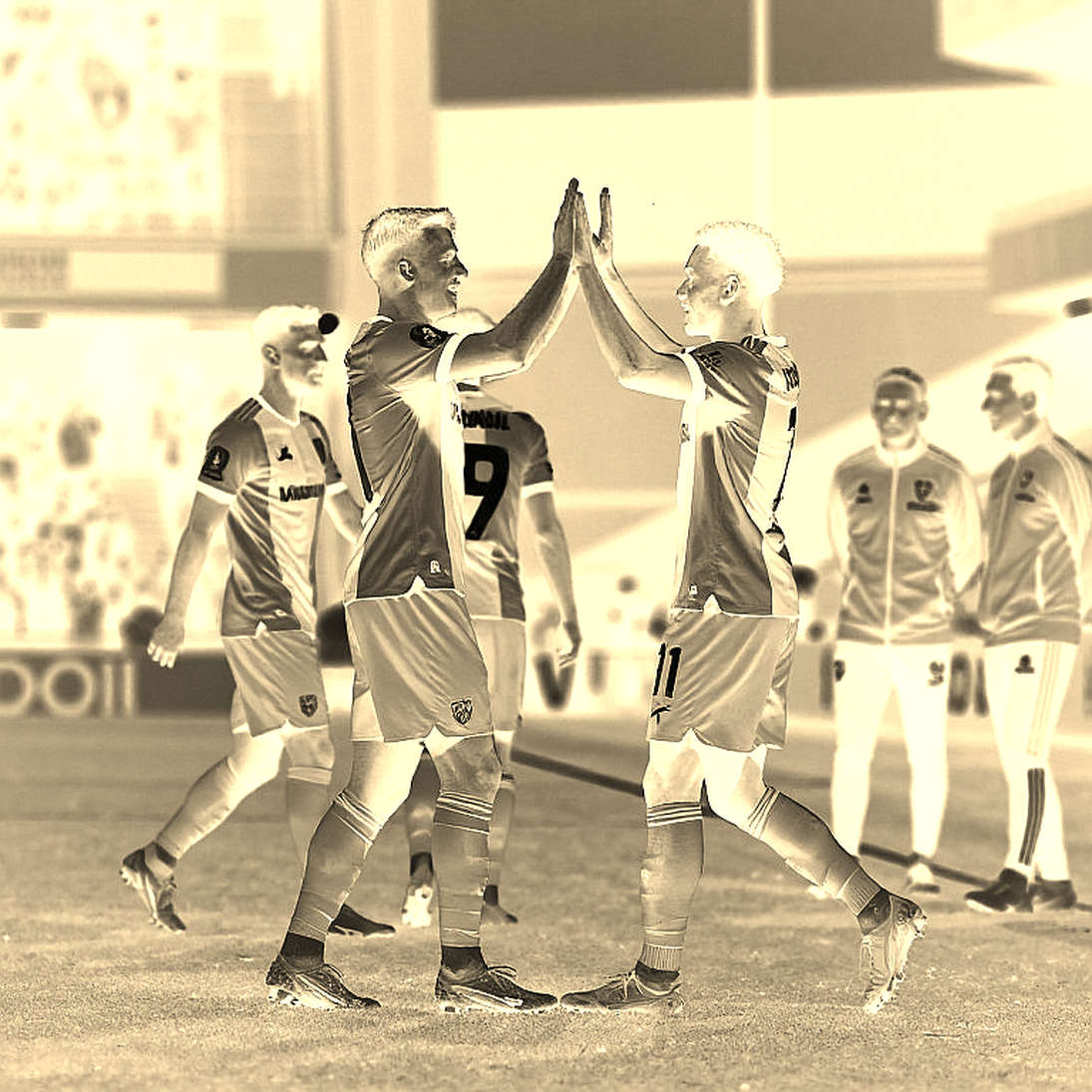
Vietnam's back three was propped up by two factors: goalkeeper Le Giang Patrik's concentration and what I call a cohesion subsidy from the club system. That is a strength now. It is also a fragility if the CAHN group is absent or injured at the same time.
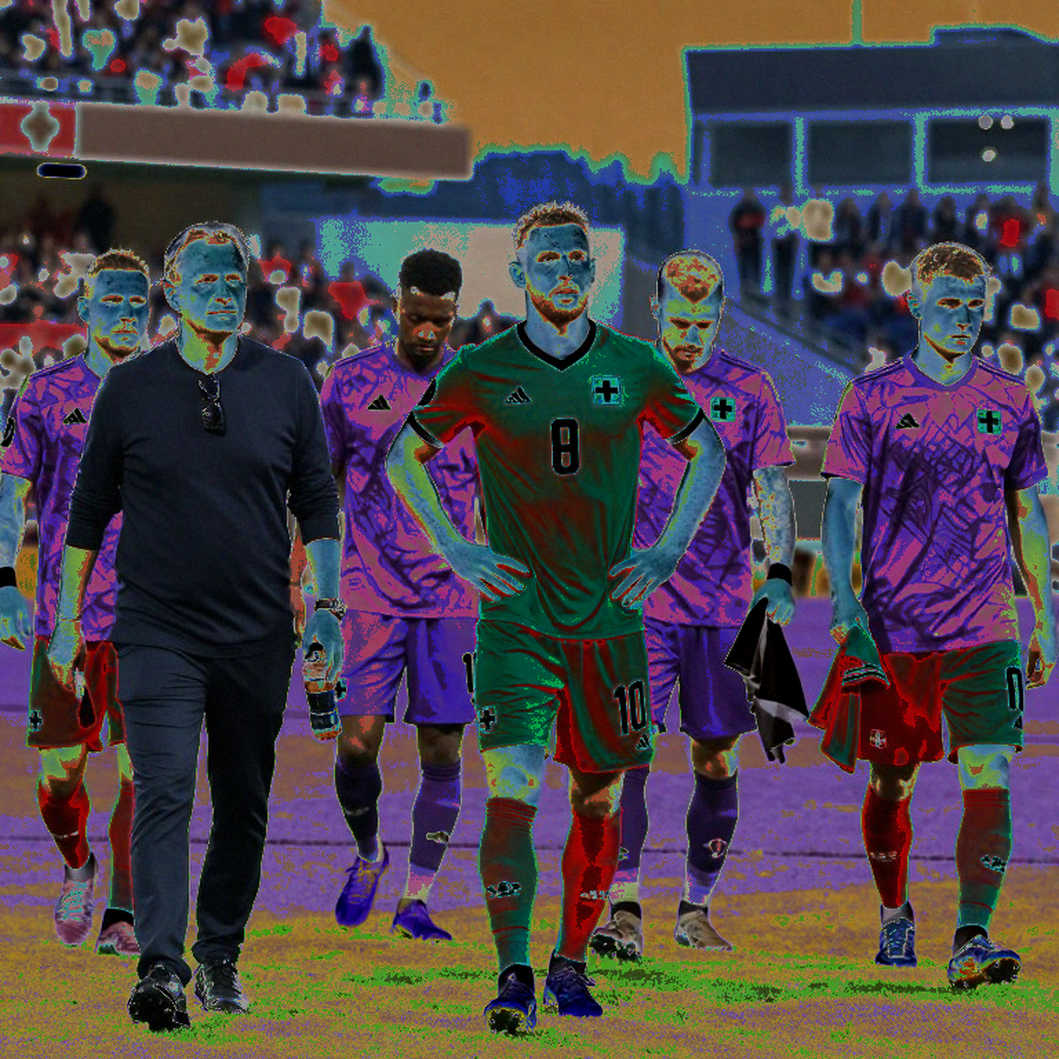
At West Ham and Leicester I learned that money always leaves fingerprints. Here there is no money, but there is another fingerprint: the fingerprint of resourcing by selection. Four naturalised players featured — Xuan Son, Adou Minh, Williams Minh Hoang and Khoa Ngo. This is a kind of free-transfer market at national-team level.
Behind every transfer number there is a story deliberately blurred. For Vietnamese football, that story sits not in fees but in the registration mechanism. A football nation that cannot afford to buy international-class players turns to diaspora identification instead. It works, and it opens eligibility questions a single match cannot answer.
Notably, the model does not merely patch a gap for one game. It operates at squad scale. Williams Minh Hoang started, Khoa Ngo came off the bench, Adou Minh completed his defensive duties. Three new faces, three positive outcomes in one evening — a hit rate rarely that even.
Back to the pitch. The biggest technical bright spot is Williams Minh Hoang. Nineteen years old, 1.89m, starting on debut and assisting the only goal. That is a generational transition happening for real, not a slogan on a banner.
But the bill arrived in the 60th minute. Xuan Son left the field with a gait that worried everyone watching. Tuan Phong judged the injury potentially serious and possibly tournament-ending. For an already thin squad, that is the biggest loss available.

Dinh Bac scored but showed fatigue in the second half. Hoang Duc's absence visibly reduced tempo control; his replacement, Hoang Hen, did not deliver the equivalent. Tai Loc's late cameo drew praise, a signal the staff may be considering a midfield reshuffle.
Here I must pause on the competition's format. Sources call it the "FIFA ASEAN Cup 2026" but elsewhere the "ASEAN Cup 2026". The ASEAN national-team championship has historically been run by the ASEAN Football Federation under the ASEAN Championship name, played in November and December. A tournament staged on 26 September in Bandung, inside a FIFA window, does not match that history. I am not asserting anything yet. But bới lông tìm vết is my trade, and naming discrepancies like this are usually the first sign of a bigger story.
If the event is genuinely FIFA-sanctioned, player registration rules and clubs' release obligations differ. If it is AFF-run, the "three days of preparation" and "missing our best squad" narratives deserve closer scrutiny. Two possibilities, two very different consequences. Verification belongs to those who published the information.
Now the hardest part: reading the match without imputing motive. There is a very different reading of Vietnam's counter-attacking approach. In a centralised, congested tournament, fitness is real currency. A team may choose to conserve energy in the opener, accept ceding territory and win through one moment — that can be entirely correct calculation. The result is the only thing written into the table. Nobody hands the trophy to the side with better possession.
I also do not think Kim Sang Sik was wrong to select on fitness. He said clearly that he used players with good club-level conditioning to meet tactical demands. That is the decision of a manager with authority, not one chasing public opinion. With a patched-up squad, that authority is necessary.
The Philippines deserve serious regard too. They arrived with nearly their best squad, and another Southeast Asian side preparing that thoroughly reflects a broader trend: the gap between regional football nations is narrowing. Vietnam remain contenders, but contender status no longer means being allowed to turn up at 70 percent.
This reasonable reading does not erase the risk. The warning about opponents' long shooting is grounded in reality, and the 23rd-minute crossbar is the evidence. The midfield problem is systemic, not accidental. If Vietnam meet a team with midfielders who can shoot from distance, that space will be exploited repeatedly, and this time there may be no upright to save them.
And here is the point I want to stress most: the win over the Philippines is hiding a fragile architecture, and every optimistic conclusion drawn from a single match is running ahead of the evidence. Three days of preparation, one converted chance, one serious injury that could reshape the campaign. That is not a foundation for declaring a title contender.
There is one more layer rarely discussed. Vietnam's defence in this match depended on four players from a single club. At national-team level, that concentration delivers immediate cohesion. At domestic-league level, it reflects resource imbalance. A football nation whose national back line is supplied mainly by one club carries systemic risk if that club declines, suffers clustered injuries, or changes its style.
Investigation is not about revenge; it is about keeping the little people from being swallowed in silence. Here, the "little people" might be a young substitute entering in the 85th minute, or simply a supporter who trusts the table without looking at how it was made. Modern football does not lack those dancing in the dark, only people willing to turn on the light.
So watch two things in the next match: who starts as the midfield pair, and whether Xuan Son is available. Those two data points will say more than any commentary on this 1-0. And if the team genuinely wants to reach the final, the question to answer is not how many goals they score, but how many minutes they can survive without exposing the space in front of their box.