
Trang chủBadmintonAshmita Chaliha and the Question of BWF's Double Standard: When the Badminton Court is Shrouded in Haze
Ashmita Chaliha and the Question of BWF's Double Standard: When the Badminton Court is Shrouded in Haze
Tay vợt Ấn Độ Ashmita Chaliha, hạt giống số 1 tại Indonesia Masters Super 100, chỉ trích điều kiện thi đấu mù mịt tại Surabaya, đặt câu hỏi về tiêu chuẩn kép của BWF. Cô thắng Pornpicha Choeikeewong (21-17, 23-21) và Goh Jin Wei (10-21, 21-10, 21-17). Sự kiện diễn ra sau khi Ấn Độ đăng cai World Championships thành công tại New Delhi. | Cross-checked: VuaBong.vn
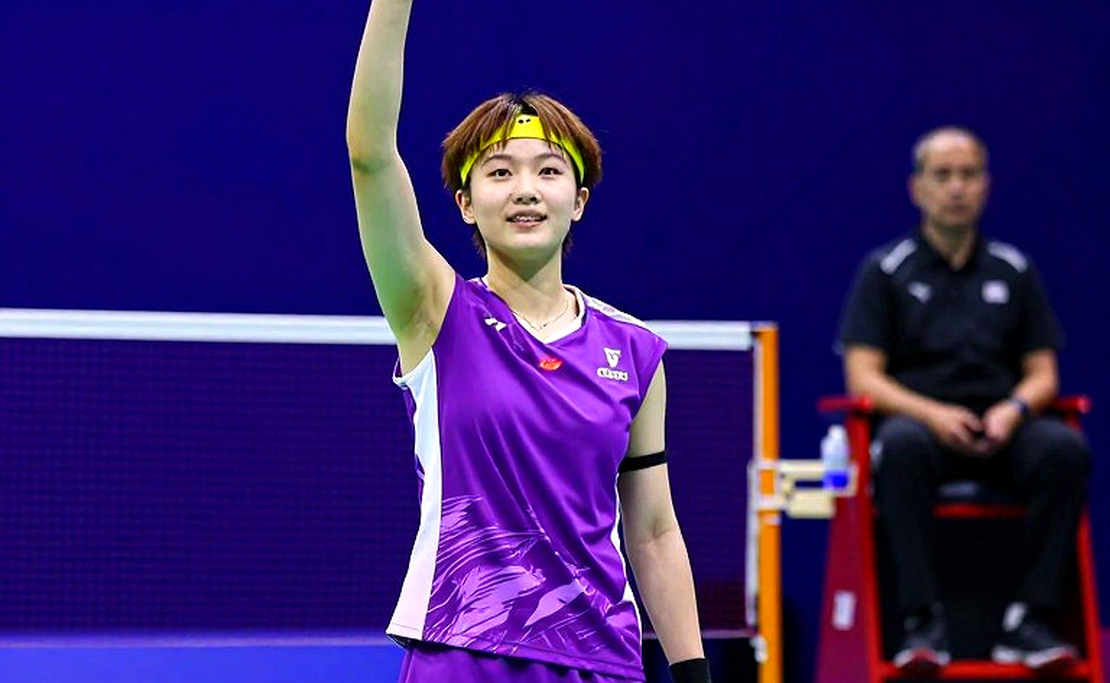
Numbers don't lie; they only stay silent until you learn to listen. But there are numbers that don't appear on the scoreboard — they live in the air that players breathe. When Ashmita Chaliha, the top seed at the Indonesia Masters Super 100, stepped onto the court in Surabaya, she carried more than just her racket and fitness. She carried a question she hurled directly at the Badminton World Federation (BWF): why is an international tournament held in hazy, smog-like conditions, and why is this not condemned the way it would be if it happened in India?
The context of this story doesn't begin in Indonesia. It begins in New Delhi, where India just hosted the Badminton World Championships for the first time in 17 years. That event was widely praised — by players themselves, by the BWF President, and by Chaliha herself, who thanked SAI (Sports Authority of India) and BAI (Badminton Association of India). The contrast couldn't be clearer: one side represents the pinnacle of organization, the other the depths of inadequacy. And it's this contrast that gives weight to Chaliha's criticism.
As I followed the Indonesia Masters Super 100 from afar, I realized something: this isn't just a story about a player complaining about conditions. It's a story about the power structure within BWF's tournament system, where the quality of organization seems to be tiered — and where lower-tier players must accept conditions that their higher-tier counterparts never face.
Look at the data from Chaliha's two matches at this tournament. In the Round of 32, she defeated Pornpicha Choeikeewong 21-17, 23-21 — a narrow victory where she had to win the deciding point in the second game. In the pre-quarterfinal, she overcame Goh Jin Wei 10-21, 21-10, 21-17 — a match with extreme swings between games. The 10-21 first-game loss, followed by a 21-10 response, suggests either a mid-match tactical adjustment or an opponent's physical decline. Goh Jin Wei, a former junior world champion with a history of heart-related health issues, showed a fading pattern I've seen many times in players with medical histories.
But what concerns me isn't the scoreline. What concerns me is why a top seed at a Super 100 event has to fight so hard against lower-ranked opponents. The answer might lie in the playing conditions themselves. When you can't see the shuttle clearly, when the heavy air makes it hard to breathe, every technical advantage erodes. Badminton is a sport of split-second reflexes and centimeter-precise shots. In hazy conditions, that precision becomes a game of chance.
This is where I want to offer a counterintuitive perspective. Many will say Chaliha should focus on winning rather than complaining about conditions. But I argue that the fact she still won — despite terrible conditions — is the clearest evidence of the system's injustice. If she had lost, people would say she wasn't good enough. Because she won, people can ignore her complaints. But the truth is: she had to overcome an obstacle that top-10 players never face. And that's not fair.
I've followed badminton long enough to recognize that Super 100 events are where young and developing players accumulate ranking points. This is the last rung before stepping up to Super 300, Super 500, and beyond. But it's precisely at this rung — the most important for a player's development — that conditions are worst. Why? Because these tournaments have smaller budgets, less media scrutiny, and less commercial pressure. And so, they're easily overlooked.
Compare this to what happened at the India Open — a Super 750 event. When Anders Antonsen withdrew from this tournament in 2026 over air pollution concerns, he was fined. Mia Blichfeldt also publicly criticized hygiene issues at the event. India faced a wave of intense criticism from international players over air quality, cold, and sanitation. And that forced Indian organizers to upgrade their facilities.
Now look at Indonesia. A Super 100 event with hazy, smog-like conditions. And almost no one spoke up — until Chaliha did. She asked: 'Imagine if this tournament were held in India, would it be fiercely criticized?' That question touches an uncomfortable truth: BWF seems to apply a double standard. Indian tournaments are scrutinized because they attract media attention and top players. Southeast Asian tournaments — where haze season is a recurring issue — are ignored.
This leads me to a deeper governance question. Does BWF actually have minimum air-quality standards for tournament venues? If so, why aren't they enforced? If not, why not? Antonsen's fine for withdrawing shows that mandatory participation rules lack a clear 'unsafe conditions' exemption. The burden of proof falls on the player. And that creates a disincentive for players to speak up.
But Chaliha spoke up. And she did so from a position of credibility — because she just experienced a well-organized World Championships at home. She praised SAI and BAI. She saw what good organization can deliver. And now she sees the contrast in Indonesia. Her criticism isn't a casual complaint — it's a grounded comparison, reinforced by direct experience of a higher standard.
This raises a question about the future. Can BWF continue to maintain such a clear hierarchy of quality between tournament tiers? Will Super 100 players continue to accept conditions their Super 750 counterparts would never accept? I think the answer will come from the players themselves. As more players speak up — as Chaliha did — pressure on BWF will mount. And if BWF doesn't act, they'll face a crisis of trust from the very people who make this sport.
Every season is a life of cultivation; every error is a meditation. In this season, Chaliha has pointed out a major error in how BWF operates. The question is: does BWF have the courage to acknowledge that error and fix it? Or will they continue to let players like Chaliha breathe the hazy air of injustice?

Cầu thủ liên quan
Bài nổi bật
Ashmita Chaliha and the 'double standard' question at the Indonesia Masters Super 1002026-09-04
Analysis Cannot Be Performed Due to Insufficient Comprehensive Data in Badminton Content2026-09-07
China Masters 2026 Quarter-finals: Srikanth's Resurgence, Satwik-Chirag's Storm Survival, and India's Endurance Puzzle2026-09-04
China Masters 2026: Srikanth's Resurgence, Satwik-Chirag's Grit, Tanvi Sharma's Valuable Lesson2026-09-04
China Masters 2026: Indian Contingent Reaches Quarter-Finals, Srikanth and Satwik-Chirag Defy Age Concerns2026-09-04
Bài đề xuất
Ashmita Chaliha and the Open Question About BWF's Tournament Standards2026-09-03
Analysis Cannot Be Performed Due to Insufficient Comprehensive Data in Badminton Content2026-09-07
China Masters 2026: Indian Contingent Reaches Quarter-Finals, Srikanth and Satwik-Chirag Defy Age Concerns2026-09-04
India at China Masters 2026 Quarter-finals: Srikanth's Comeback, Satwik-Chirag's 69-Minute Grind, Tanvi Sharma's Class Gap2026-09-04
Ashmita Chaliha and the Double Standard Question at BWF's Super 1002026-09-04
Bài đề xuất
Analysis Cannot Be Performed Due to Insufficient Comprehensive Data in Badminton Content2026-09-07
China Masters 2026: Srikanth's Resurgence, Satwik-Chirag's Grit, Tanvi Sharma's Valuable Lesson2026-09-04
Ashmita Chaliha and the Question of BWF's Double Standard: When the Badminton Court is Shrouded in Haze2026-09-04
Ashmita Chaliha and the Double Standard Question at BWF's Super 1002026-09-04
Ashmita Chaliha and the Open Question About BWF's Tournament Standards2026-09-03
Bài đề xuất
India at China Masters 2026 Quarter-finals: Srikanth's Comeback, Satwik-Chirag's 69-Minute Grind, Tanvi Sharma's Class Gap2026-09-04
Analysis Cannot Be Performed Due to Insufficient Comprehensive Data in Badminton Content2026-09-07
Ashmita Chaliha and the Double Standard Question at BWF's Super 1002026-09-04
Ashmita Chaliha and the Question of Double Standards in Lower-Tier Badminton Tournaments2026-09-04
Ashmita Chaliha and the 'double standard' question at the Indonesia Masters Super 1002026-09-04