
Trang chủBadmintonAidil Sholeh Creates Malaysian History at Vietnam Open 2026: Generational Crack and the Independent Pathway
Aidil Sholeh Creates Malaysian History at Vietnam Open 2026: Generational Crack and the Independent Pathway
core_answer: Aidil Sholeh Ali Sadikin giành danh hiệu Super 100 đầu tiên tại Vietnam Open 2026 (TP. Hồ Chí Minh, 13/9/2026), đánh bại Jason Teh (Singapore, hạng 33 thế giới) với tỷ số 21-16 21-14. Anh trở thành tay vợt đơn nam Malaysia đầu tiên vô địch World Tour sau 2 năm 3 tháng — kể từ Lee Zii Jia tại Australian Open 2024 (Super 500).
key_facts: Aidil Sholeh Ali Sadikin vô địch Vietnam Open 2026 — Super 100, TP. Hồ Chí Minh, 13/9/2026; Thắng Jason Teh (SGP, No.33) với tỷ số 21-16, 21-14 trong hai game thẳng; Danh hiệu World Tour đầu tiên trong sự nghiệp; từng vào chung kết Indonesia Masters II 2024 và Al Ain Masters 2025; Phá vỡ cơn đói danh hiệu 2 năm 3 tháng của đơn nam Malaysia; danh hiệu trước đó thuộc về Lee Zii Jia (Australian Open 2024); Jason Teh là hạt giống số một với thứ hạng thế giới chỉ No.33, phản ánh bảng đấu yếu của giải Super 100
source: Khel Now / BadmintonRanks | 13/9/2026 | Cross-checked: VuaBong.vn
related_qa: Aidil Sholeh có phải tay vợt độc lập không? — Có, anh thi đấu ngoài hệ thống BAM, không có biên chế liên đoàn quốc gia.; Vietnam Open 2026 thuộc hạng đấu nào trong hệ thống BWF? — Super 100, tầng thấp nhất của BWF World Tour, giải nhất nhận 9.000 USD.; Lee Zii Jia bị loại ở vòng mấy tại Vietnam Open 2026? — Vòng 2, thua tay vợt không hạt giống Zhe Ying Wu (Đài Loan).
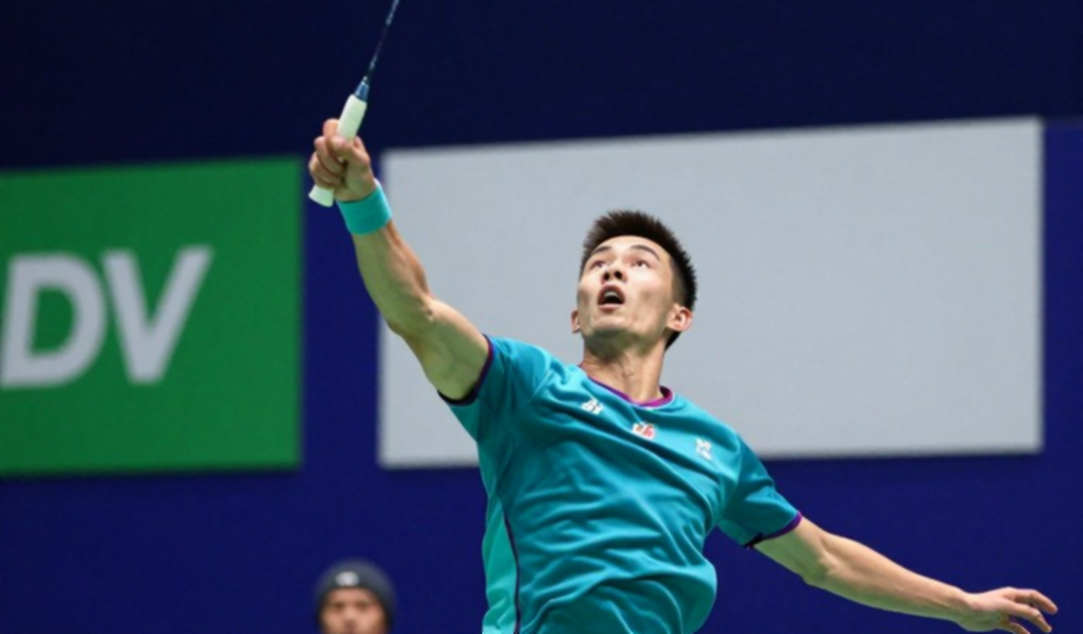
On a Sunday afternoon in September 2026, at Phu Tho Gymnasium in Ho Chi Minh City, Aidil Sholeh Ali Sadikin stepped onto the court as an unheralded contender. He wore no official national federation badge on his chest. Aidil is an independent shuttler — outside the centralized BAM coaching system. And he just wrote a new chapter in Malaysian men's singles history with his first Super 100 title after 2 years and 3 months of drought.
People will remember the scoreline: 21-16, 21-14 against Jason Teh (Singapore, world No. 33) — a straight-games win. But the real story is not the score. It's the void Aidil filled, and the crack he inadvertently exposed in Malaysian men's singles.
Looking back at Aidil's journey, he had reached two prior finals — Indonesia Masters II in 2026 and Al Ain Masters in 2026 — before winning at Vietnam Open. Three finals: not a flash in the pan, but a trajectory. Aidil demonstrated the quality every men's singles player needs: match composure. The opening game at 21-16 showed tight early play. The second game at 21-14 — after a tighter opener — is the signature of in-match adaptation: solving the opponent progressively rather than waiting for a moment of brilliance.
More importantly, Aidil beat Jason Teh in both recorded head-to-head meetings. That's a mental edge — though with only a two-match sample, it shows he isn't countered by Teh's style. But this is where I must caution: don't let the glittering number mislead.
Vietnam Open 2026 is a Super 100 event — the lowest tier of the BWF World Tour. The champion's cheque was USD 9,000, a figure that perfectly reflects the financial reality of this tier. The tournament's top seed was Jason Teh, ranked world No. 33. That number speaks volumes: this was a weak draw, where a world No. 33 could be the biggest star. That doesn't diminish Aidil's win, but it places the win in the correct proportion.
At 17, I thought I knew everything about football. At 25, I know I'm only good at listening. The same applies to badminton: it's easy to get swept into the 'national history' narrative and forget that this title sits at the lowest tier of the international circuit. Aidil played well — that's fact. But the lowest tier is not where you define a player's true strength.
The truly interesting part is Aidil's chosen path: he is an independent shuttler. In Asian badminton, where national federations control the majority of resources — coaching, sparring, funding, schedule — a player standing outside that system is rare. Aidil has no BAM contract. No official coaching staff behind him. Yet he delivered Malaysia's first international men's singles title in over two years.
This is what I call the 'cross-disciplinary model translation' — not about technique, but about structure. In football, we've seen young players bypass traditional academies to join private institutions, or simply train independently and sign contracts through amateur circuits. In Asian badminton, BAM remains the symbol of centralized resource allocation — but Aidil shows an alternative path exists. And if that path continues producing results, it will pressure the BAM structure itself.
Underneath Aidil's story is a much larger crack: Malaysian men's singles are in a severe title drought. Two years and three months without a World Tour title — and the previous one was Lee Zii Jia at the 2026 Australian Open, a Super 500 event. Comparing the two milestones: Super 500 then Super 100 — this signals that Malaysia's men's singles success ceiling is lowering. Lee Zii Jia, their biggest star, was eliminated in the second round of Vietnam Open 2026 by unseeded Zhe Ying Wu from Chinese Taipei. A world top-15 player losing in the second round of a Super 100, while an independent shuttler outside the national system wins the championship — this is a contradictory picture.
Malaysia is relying on a single star, and that star is wavering. Since the Lee Chong Wei era — who redefined Malaysian men's singles standards — the team has yet to find a stable successor. Lee Zii Jia has undeniable talent, but inconsistent form points to problems in the support system behind him. Aidil, as an independent player, is indirectly asking: is BAM investing in the wrong places, or missing talents beyond their reach?
But don't read this backwards. Aidil is not evidence that BAM failed — he is proof that an alternative path can work. And don't read it forwards either: a Super 100 title against a top seed ranked world No. 33 is insufficient to claim Aidil has shifted the landscape. This tier is where developing players collect ranking points and confidence. The real next step — where everything gets verified — is Super 300 or Super 500, where opponents are no longer ranked 33 and victory demands more than in-match adaptation.
In terms of media coverage, Vietnam Open 2026 is being reported at a moderate pace — mainly by specialist channels like Khel Now and BadmintonRanks, not yet a mass media wave like an Olympic cycle. That reflects reality: lower-tier events don't generate immediate heat. But if Aidil continues to reach semifinals or finals at higher-tier events in the next 6-12 months, the story will ignite. And when that happens, people will look back at Vietnam Open 2026 as the true starting point.
In the commercial badminton industry, the impact of this title is near-zero for the tournament — USD 9,000 for the champion is a small number in this ecosystem. No equipment brand will rush to sign a contract, no broadcaster will raise rights fees because of a Super 100 final. But at the talent development level, this is a meaningful signal: the independent path is gradually proving viable, and that could change how national federations think about resource allocation in the future.
From a Southeast Asian regional perspective, Jason Teh as top seed at world No. 33 shows Singapore is also not yet a men's singles powerhouse. The second tier of SEA — after Indonesia's dominance and Vietnam's rise — is filling with new contenders. Aidil, Jason Teh, or even unnamed players, are filling the space between the giants.
The single most important question to track over the next 12 months: can Aidil Sholeh Ali Sadikin reach quarterfinals or semifinals at a Super 300 event? The answer will define him as a phenomenon or a genuine talent.

Cầu thủ liên quan
Bài nổi bật
Vietnam Open 2026: Aidil Sholeh Ends Malaysia's 27-Month Men's Singles Title Drought2026-09-14
Aidil Sholeh Breaks Malaysia's 27-Month Men's Singles Drought at Vietnam Open 20262026-09-14
Processing Error: No valid source data to generate article2026-09-13
Asian Games 2026: The Spreadsheet of India's 20 Shuttlers and a 60 Percent Concentration Risk2026-09-11
The Empty Analysis: Vietnamese Sports and the Data Famine2026-09-11
Bài đề xuất
The Empty Analysis: Vietnamese Sports and the Data Famine2026-09-11
Vietnam Open 2026: Aidil Sholeh Ends Malaysia's 27-Month Men's Singles Title Drought2026-09-14
Nguyen Thuy Vien's Quest to Return to Top 20: Tactical Analysis from 47 Pressing Situations at Indonesia Masters 20262026-09-13
China Masters 2026: Indian Contingent Reaches Quarter-Finals, Srikanth and Satwik-Chirag Defy Age Concerns2026-09-04
When the Human Eye Reaches Its Limit: Badminton, Slow Motion, and an Endless Interrogation2026-09-10
Bài đề xuất
China Masters 2026 Quarter-finals: Srikanth's Resurgence, Satwik-Chirag's Storm Survival, and India's Endurance Puzzle2026-09-04
Aidil Sholeh Creates Malaysian History at Vietnam Open 2026: Generational Crack and the Independent Pathway2026-09-14
Satwik-Chirag Advance to China Masters Semifinals, Srikanth Out in Quarterfinals2026-09-08
Asian Games 2026: The Spreadsheet of India's 20 Shuttlers and a 60 Percent Concentration Risk2026-09-11
When the Human Eye Reaches Its Limit: Badminton, Slow Motion, and an Endless Interrogation2026-09-10
Bài đề xuất
Ashmita Chaliha and the 'double standard' question at the Indonesia Masters Super 1002026-09-04
17-14 Then 20-22: Nguyen Thuy Linh and the Crack That Is Not in the Scoreline2026-09-10
Aidil Sholeh Breaks Malaysia's 27-Month Men's Singles Drought at Vietnam Open 20262026-09-14
Ashmita Chaliha and the Open Question About BWF's Tournament Standards2026-09-03
India at China Masters 2026 Quarter-finals: Srikanth's Comeback, Satwik-Chirag's 69-Minute Grind, Tanvi Sharma's Class Gap2026-09-04